Why Businesses Are Moving to Centralized Workspaces

Businesses are using more digital tools than ever.
That sounds like progress, and in many ways it is. Teams have better software for project management, communication, design, file storage, analytics, sales, and collaboration.
But there is a downside.
As the number of tools increases, work can become more fragmented.
A project may live in one platform. The files may be somewhere else. Important conversations may be buried in chat. A client link may be saved in a browser. A process document may be sitting in a folder no one remembers.
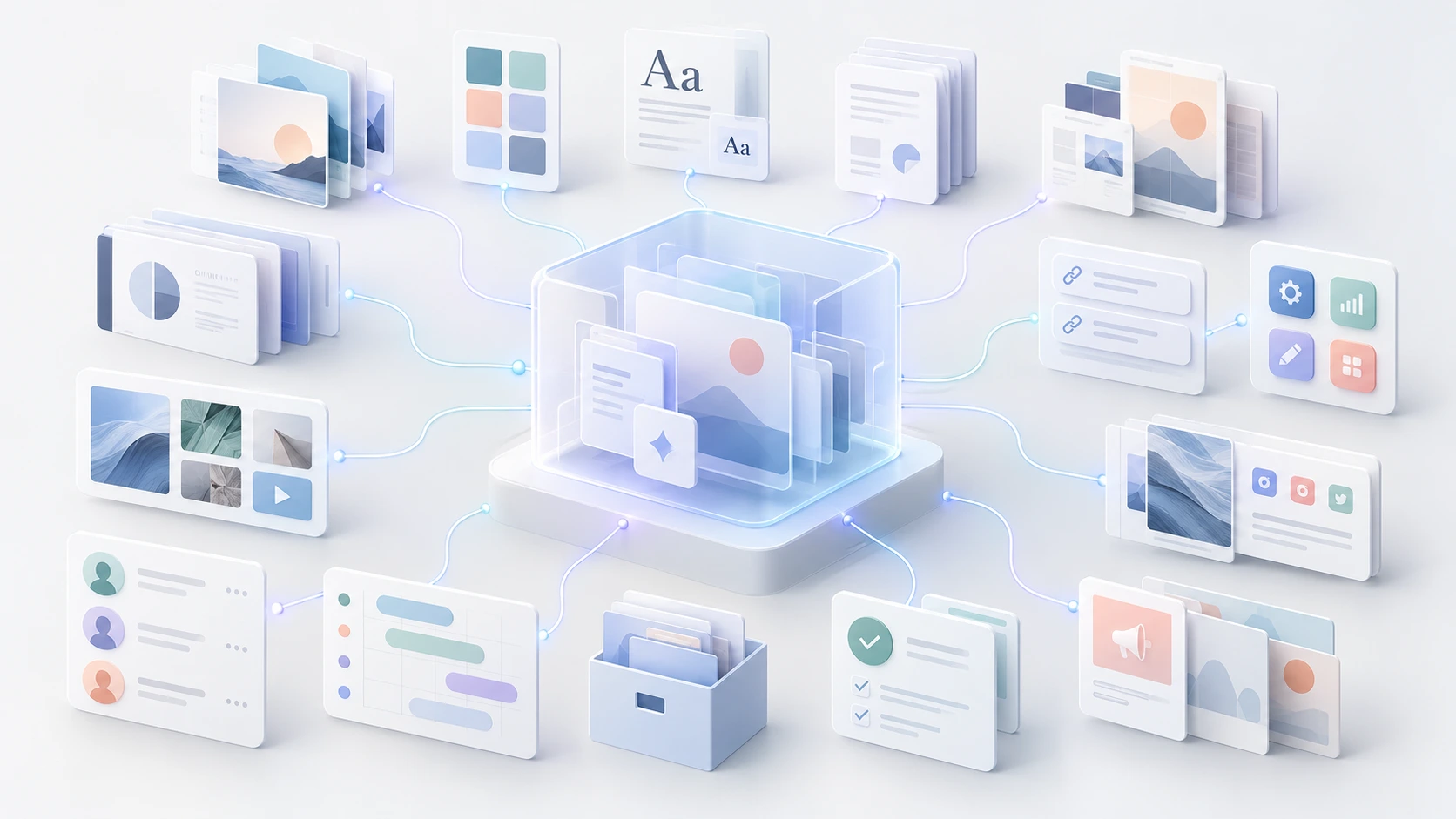
This is one reason more businesses are moving toward centralized workspaces.
The goal is not necessarily to replace every tool.
It is to create a clearer digital environment around them.
The Problem Is No Longer Access to Tools
A few years ago, businesses often struggled because they did not have the right software.
Today, the problem is often the opposite.
They have too many places to work.
A typical team might use:
- Slack for communication
- Google Drive for files
- Notion for documentation
- Asana for projects
- Figma for design
- HubSpot for sales
- Dropbox for client assets
- Email for everything else
Each tool may be useful.
But employees still have to remember where everything lives.
That creates a new kind of operational friction.
Businesses Are Looking for One Clear Starting Point
A centralized workspace gives employees one place to begin.
Instead of asking:
“Which app should I open?”
they can start with:
“Which client, project, team, or brand am I working on?”
From there, the relevant information can be easier to access.
That shift sounds small, but it changes how people interact with the company’s digital environment.
The workspace becomes the starting point, while specialized tools continue doing what they are best at.
Centralization Helps Reduce Digital Friction
Most teams do not lose hours at once.
They lose minutes.
A few minutes searching for a file.
A few minutes asking someone for a link.
A few minutes checking whether a document is current.
A few minutes switching between systems.
These moments add up.
Centralized workspaces reduce some of that friction by bringing related information closer together.
For example, instead of having a client’s resources spread across different platforms, a team can access:
Client information
Brand assets
Documents
Links
Projects
Digital tools
from one central environment.
The underlying systems may still be separate.
The experience does not have to feel separate.
Remote and Hybrid Work Changed Expectations
Centralized workspaces have also become more important because teams are no longer always sitting in the same office.
When people work remotely, they cannot simply turn around and ask:
“Where is that file?”
or:
“Who knows how this works?”
The digital workspace has to provide more of the context that the physical office once did.
That means companies need clearer systems for:
- Knowledge
- Documentation
- Ownership
- Resources
- Communication
- Access
A centralized workspace gives distributed teams a shared digital home.
Businesses Need Better Visibility
As companies grow, it becomes harder to understand what is happening across the organization.
Leaders may want to know:
What projects are active?
Which clients are being managed?
Where are the important resources?
Who owns what?
What changed recently?
When information is spread across too many tools, visibility becomes difficult.
Centralized workspaces can provide a higher-level view of the business without forcing leaders to open every individual platform.
Onboarding Is Another Major Reason
New employees often receive a list of tools.
Slack.
Drive.
Project management.
Documentation.
Email.
Client folders.
Internal systems.
Then they are expected to understand how everything fits together.
A centralized workspace can make onboarding easier by giving new employees a clear map of the digital environment.
Instead of learning every tool first, they can start by understanding the structure of the business.
Then they can move into the specialized tools when needed.
Centralization Makes Knowledge Easier to Preserve
Another reason businesses are moving in this direction is knowledge retention.
Important information often becomes tied to individuals.
One person knows where the files are.
Another knows the history of a client.
Someone else understands the process.
When those people leave, the organization can lose context.
Centralized workspaces help turn individual knowledge into shared knowledge.
The more information is connected to the business, project, or client rather than to a person, the easier it becomes to preserve.
The Rise of AI Is Making Centralization More Valuable
AI is also changing the role of centralized workspaces.
An AI assistant is much more useful when it has access to structured context.
Imagine asking:
“What is the current status of this client?”
If the relevant information is scattered across multiple disconnected systems, producing a useful answer becomes harder.
If the client’s documents, links, resources, projects, and history are connected, the system has much better context.
This means the future value of a centralized workspace may not only be better organization.
It may also be better machine-readable context for automation and AI.
Centralized Does Not Mean Everything Must Be in One App
This is an important distinction.
A centralized workspace does not have to replace:
Figma.
Slack.
Google Drive.
Asana.
Your CRM.
Your analytics platform.
These tools may still be essential.
Centralization is about creating a system around them.
Think of it as a layer that helps people understand:
What exists
Where it belongs
How it connects
Who owns it
What to do next
The best centralized workspace does not necessarily do everything.
It makes everything easier to navigate.
Why This Matters for Agencies
Agencies feel the problem even more because they manage multiple client environments at the same time.
One client may use Drive and Figma.
Another may use Dropbox and Notion.
Another may use completely different tools.
That makes context switching unavoidable.
A centralized workspace can help agencies organize around the client brand instead of around the software.
For example:
Client A
→ Brand assets
→ Documents
→ Links
→ Tools
→ Projects
Client B
→ Brand assets
→ Documents
→ Links
→ Tools
→ Projects
Now the client becomes the starting point.
That is much easier to navigate than remembering a different software stack for every account.
Centralization Is Really About Clarity
Businesses are not moving toward centralized workspaces because they want another tool.
They are doing it because their digital environment has become harder to understand.
The value of centralization is clarity.
A clear place to start.
A clear structure.
A clear source of truth.
A clear view of the work.
When those things improve, teams spend less time managing the system around the work and more time doing the work itself.
How Awolan Fits Into This Shift
Awolan is built for teams and agencies managing multiple client brands.
Instead of asking teams to replace every tool they already use, Awolan gives each client brand a centralized workspace for its assets, documents, links, and digital tools.
That creates one clear place to start.
The agency can keep using its existing software while making the overall client environment easier to understand and manage.
Client → Brand → Resources
That is the idea behind centralized workspaces.
Not fewer capabilities.
Less fragmentation.
Every client. Every brand. One place.