The Hidden Cost of Using Too Many Business Tools

Modern teams have more software than ever.
Project management tools. Cloud storage. Chat apps. CRMs. Design platforms. Analytics tools. Documentation systems. Automation software. Scheduling tools.
Each one may solve a real problem.
But when a business keeps adding tools without thinking about how they work together, the result can be the opposite of productivity.
Instead of helping people work faster, the software stack starts creating more searching, more switching, more confusion, and more admin work.
The real cost of too many business tools is not only the subscription fee.
It is the time and attention your team loses every day.
Tool Overload Starts Slowly
Most companies do not intentionally build a complicated software stack.
It usually happens one problem at a time.
A team needs better project management, so they add a new platform.
Marketing needs a content tool.
Design needs another platform.
Sales introduces a CRM.
Someone creates a Notion workspace.
Another team starts using Google Drive differently.
Eventually, important business information is spread across many different systems.
The tools may all be useful individually.
The problem is the fragmentation between them.
1. Your Team Spends More Time Searching
The more places information can live, the harder it becomes to find.
A team member may need to check:
- Google Drive
- Slack
- Asana
- Notion
- Dropbox
- A client portal
just to find one document.
This creates a hidden productivity cost.
The work exists, but people spend time trying to locate it.
For agencies managing multiple clients, the problem becomes even bigger because every client may use a different combination of tools.
2. Context Switching Slows Work Down
Every time someone moves between tools, they need to reorient themselves.
What was I doing?
Where is the relevant information?
Which client is this for?
What is the latest version?
A single switch may not feel expensive.
But when it happens dozens of times throughout the day, it creates unnecessary mental friction.
The problem is not that teams use multiple tools.
The problem is when the workflow requires people to constantly jump between disconnected environments.
3. Information Gets Duplicated
When tools are disconnected, the same information often appears in several places.
A client brief may exist in:
Google Drive
Notion
Slack
Which one is current?
Duplicated information creates uncertainty.
And once people stop trusting the system, they start asking colleagues instead.
That creates even more interruptions.
4. Knowledge Becomes Harder to Share
Some tools become unofficial knowledge silos.
A designer knows the Figma structure.
An account manager knows where the client documents live.
A marketer remembers the correct campaign dashboard.
The information exists, but only certain people know how to find it.
This becomes a bigger risk when someone changes roles or leaves the company.
A healthy digital environment should make important knowledge accessible to the team, not dependent on individual memory.
5. Onboarding Takes Longer
Imagine joining a company and being told:
“We use Slack for communication, Asana for tasks, Drive for documents, Dropbox for client files, Notion for processes, and spreadsheets for some links.”
Now imagine every client has a slightly different setup.
New employees do not only have to learn the business.
They have to learn where the business lives.
A more connected system can reduce the amount of explanation required during onboarding.
6. More Tools Mean More Administration
Every additional platform can require:
- User management
- Permissions
- Billing
- Security settings
- Integrations
- Training
- Maintenance
- Offboarding
The cost of software is not only the monthly subscription.
It is also the time required to manage the software itself.
For a growing organization, that operational overhead can become significant.
7. Software Costs Add Up Quickly
Small subscriptions can seem harmless.
$10 here.
$20 there.
$50 for another team tool.
But when dozens of employees use dozens of platforms, recurring software costs can become substantial.
More importantly, businesses sometimes pay for overlapping functionality.
For example, several tools may all offer:
- File storage
- Notes
- Tasks
- Collaboration
- Sharing
- Search
A regular software audit can help identify tools that are no longer necessary.
8. Teams Lose a Clear Starting Point
This may be the biggest problem of all.
When work is scattered across many systems, employees stop knowing where to begin.
They ask:
Where are the client assets?
Where is the latest brief?
Where do we track this project?
Which tool contains the guidelines?
Where was that decision recorded?
The business may have all the information it needs.
What it lacks is a clear digital home.
More Tools Are Not Always the Problem
The answer is not to remove every application.
Specialized software is useful.
Designers may need Figma.
Sales teams may need a CRM.
Developers may need GitHub.
Project managers may need dedicated project management software.
The goal should not be:
“Use as few tools as possible.”
The better goal is:
“Make the tools we use easier to navigate together.”
Connect the Tools Instead of Adding More
Before adding another platform, ask:
What problem are we solving?
Do we already have a tool that handles this?
Where will the new information live?
Will this simplify the workflow?
How will the team find it later?
Sometimes the solution is not another application.
It is better organization around the applications you already use.
Create One Place to Start
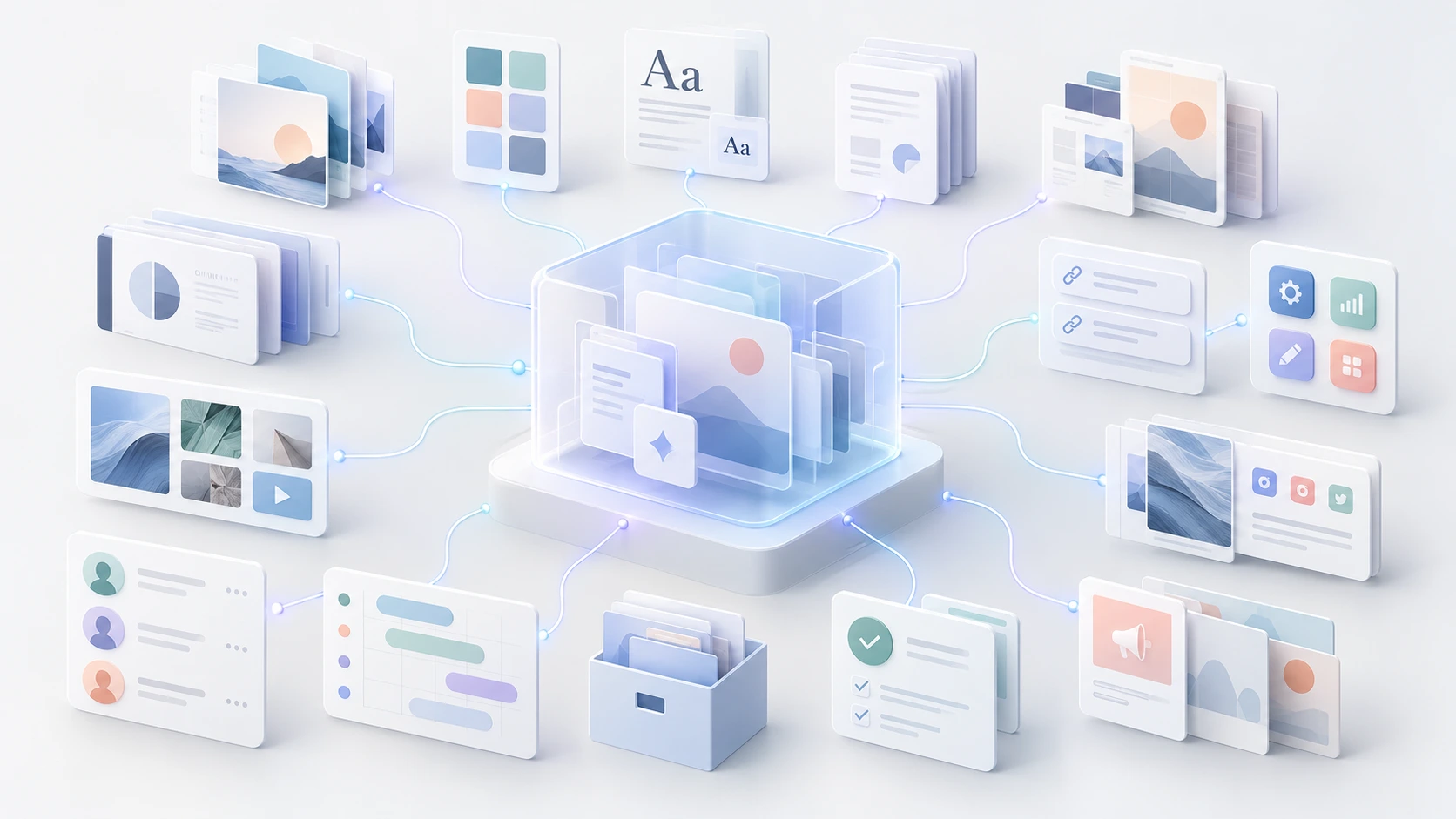
A centralized workspace can act as a layer above your existing software.
For example, an agency could organize work like this:
Client
→ Brand Assets
→ Documents
→ Projects
→ Important Links
→ Digital Tools
The actual files or workflows may still live in specialized applications.
But employees have one reliable place to understand where everything belongs.
That reduces the burden of remembering the entire software stack.
How Awolan Helps Reduce Tool Fragmentation
Awolan is designed for teams and agencies managing client brands.
Instead of forcing teams to replace all their existing software, Awolan provides a central workspace around each client brand.
Teams can organize:
- Brand assets
- Documents
- Files
- Links
- Digital tools
- Brand resources
in one place.
So instead of remembering:
“This client uses Drive for this, Dropbox for that, Slack for another thing…”
your team can start with the client brand and see the resources connected to it.
The tools still do their specialized jobs.
Awolan helps make them easier to navigate as one system.
The Real Goal Is Less Friction
The hidden cost of too many business tools is not simply money.
It is:
Lost time
Lost focus
Duplicate work
Slower onboarding
Scattered knowledge
More administration
Software should help people work.
It should not become another job to manage.
Before adding another tool to your stack, ask whether your team really needs more software—or simply a better way to connect what it already uses.
Every client. Every brand. One place.