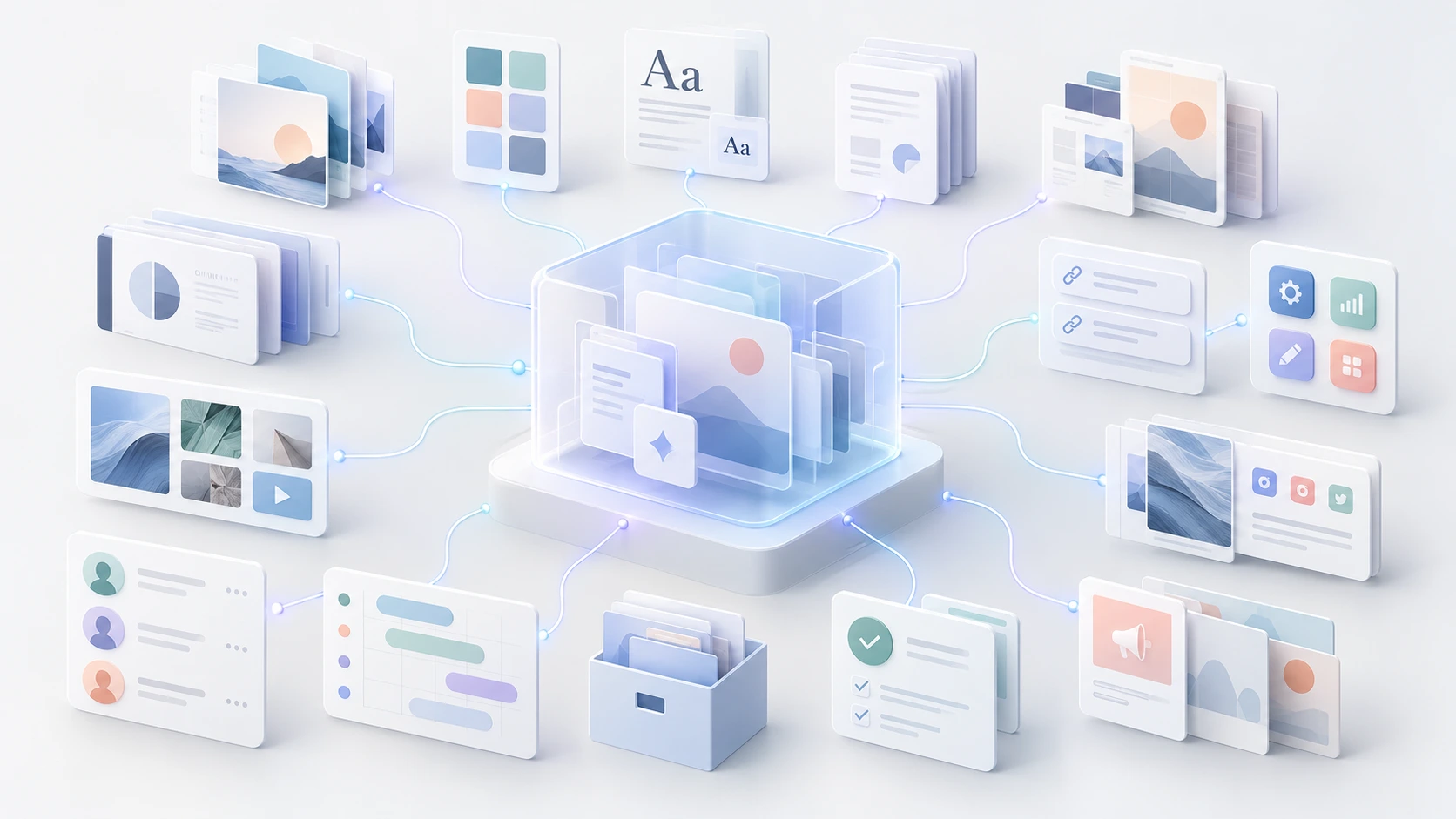
How to Simplify Your Team's Digital Workflow

Most teams do not need more tools.
They need a simpler way to work.
Over time, digital workflows can become complicated without anyone noticing. One tool is added for communication. Another for files. Another for projects. Another for client information. Another for approvals.
Eventually, the team spends too much time managing the system around the work.
A simpler digital workflow helps people move from one task to the next with less confusion, less searching, and fewer unnecessary steps.
Here are practical ways to simplify the way your team works digitally.
Start by Mapping How Work Actually Moves
Before changing anything, look at how work moves through your team today.
For example:
A client sends a request by email.
Someone copies it into a project management tool.
A designer looks for the brand assets in Google Drive.
The work is reviewed in Slack.
The final file is uploaded somewhere else.
None of those steps may seem difficult on their own.
But together, they create a fragmented workflow.
Map the full process from start to finish and ask:
- Where does work begin?
- Where does information get copied?
- Where do people usually get stuck?
- Which steps are repeated?
- Which tools are being used for the same purpose?
You cannot simplify a workflow until you can clearly see it.
Remove Unnecessary Handoffs
Every handoff creates another opportunity for delay.
If one person has to send a file to another person, who then uploads it somewhere else before a third person can use it, the workflow is probably more complicated than it needs to be.
Look for places where information can be accessed directly instead.
A better workflow might change from:
Ask someone → Wait → Receive the file → Continue working
to:
Open the shared workspace → Find the file → Continue working
The fewer unnecessary handoffs, the easier the workflow becomes.
Give Each Tool a Clear Purpose
Problems start when teams use several tools for the same job.
For example:
Tasks are partly in Slack, partly in email, and partly in a project management tool.
Files are in Drive, Dropbox, and chat attachments.
Client links are stored in spreadsheets, bookmarks, and messages.
Decide what each tool is responsible for.
For example:
Slack → Communication
Asana → Project tasks
Google Drive → File storage
Figma → Design work
Awolan → Client brand resources and digital tools
Clear roles reduce confusion.
Your team should know where something belongs before they create it.
Reduce the Number of Places People Need to Search
One of the biggest sources of digital friction is not knowing where to look.
If someone needs a client's logo, they should not have to check:
Drive.
Slack.
Email.
Dropbox.
Someone else's laptop.
The goal should be to create a predictable starting point.
For agencies, that might mean organizing around the client brand.
Client → Brand → Assets → Documents → Links → Tools
Even if some resources live in external platforms, the team still has one place that tells them where everything is.
Standardize Repetitive Work
Teams often waste time making small decisions repeatedly.
Where should this file go?
What folders should we create?
Which steps do we follow when onboarding a client?
What happens after a campaign is approved?
Turn repetitive work into repeatable systems.
For example, every new client could automatically follow the same structure:
Client setup
- Create workspace
- Add brand assets
- Add key documents
- Add important links
- Add digital tools
- Invite the relevant team members
Simple standards reduce mental load and make work easier to scale.
Make Important Information Visible
Not everything should be treated equally.
Some information is used every day.
Other information is only needed occasionally.
Make frequently used resources easy to see.
For example, a client workspace might show:
- Brand guidelines
- Primary logo
- Current campaign
- Main website
- Social accounts
- Key digital tools
Old reports and archived projects can still exist, but they do not need to compete for attention.
A good digital workflow helps people see what matters first.
Reduce Notifications
A complicated workflow is not only about where information lives.
It is also about how often your attention gets pulled away.
When every tool sends notifications, your team can spend the day reacting instead of working.
Review notification settings.
Keep alerts for things that actually require attention.
Turn off unnecessary updates, duplicate notifications, and low-priority activity.
A simpler workflow protects focus as well as information.
Automate Small Repetitive Tasks
Automation can simplify workflows when it removes boring, predictable work.
Useful examples include:
- Creating standard folders
- Sending onboarding messages
- Assigning recurring tasks
- Updating statuses
- Moving completed work
- Creating reminders
- Syncing information between tools
But automation should simplify the process, not make it harder to understand.
If nobody knows what an automation is doing, it can become another source of confusion.
Automate only the steps that are clear and repeatable.
Keep Decisions Close to the Work
Important decisions are often made in meetings or chat and then disappear.
Later, someone asks:
“Why did we change this?”
“Which version did the client approve?”
“What did we decide last month?”
Keep important decisions connected to the project, client, or resource they relate to.
A short note with the decision and date is often enough.
This prevents teams from reopening the same discussions and helps new team members understand the history.
Simplify Onboarding
A good test of your digital workflow is how easy it is for someone new to understand.
If a new employee needs several days just to learn where everything lives, the system may be too complicated.
A simple workflow should answer:
Where do I start?
Where are client resources?
Where are my tasks?
Where do we communicate?
Where do I find processes?
Which tools do we use?
The fewer explanations required, the healthier the system probably is.
Review the Workflow Regularly
Digital workflows naturally become more complicated over time.
New software gets introduced.
Old processes remain.
Temporary solutions become permanent.
That is why teams should regularly review how they work.
Every few months, ask:
- Are we using tools we no longer need?
- Are people still storing information in the wrong places?
- Are there steps we can remove?
- Are two tools doing the same job?
- What slows the team down most often?
Simplification is not something you do once.
It is ongoing maintenance.
A Simple Workflow Is Easier to Scale
A complicated system may work when only three people use it.
But complexity becomes more expensive as the team grows.
More people means more:
- Questions
- Handoffs
- Files
- Clients
- Tools
- Permissions
- Processes
The simpler your digital workflow is, the easier it becomes to onboard people and manage more work without creating chaos.
How Awolan Helps Simplify Client Workflows
Awolan is built for teams and agencies managing multiple client brands.
Instead of asking teams to replace the tools they already use, Awolan gives them a central place to organize the digital environment around each client.
Brand assets.
Documents.
Links.
Digital tools.
Client resources.
Everything starts from the client brand.
That means the workflow can become:
Client → Brand → Resource → Work
rather than:
Search → Ask → Switch tools → Search again
The goal is not to make your team use fewer tools just for the sake of it.
The goal is to make the tools you already use easier to navigate together.
Simplification Is About Removing Friction
A simple digital workflow does not mean a basic business.
It means the complexity stays behind the system instead of in front of your team.
People know where to start.
They know where information belongs.
They know which tools to use.
And they can spend more time working instead of managing the workflow around the work.
That is what a good digital system should do.
Every client. Every brand. One place.