How Centralized Knowledge Improves Team Collaboration

Great collaboration depends on more than communication.
A team can use Slack, email, meetings, project management tools, and video calls and still struggle to work well together if important knowledge is scattered across too many places.
When people cannot quickly find the latest document, client information, process, decision, or brand resource, collaboration becomes slower and more dependent on asking others for help.
That is where centralized knowledge can make a major difference.
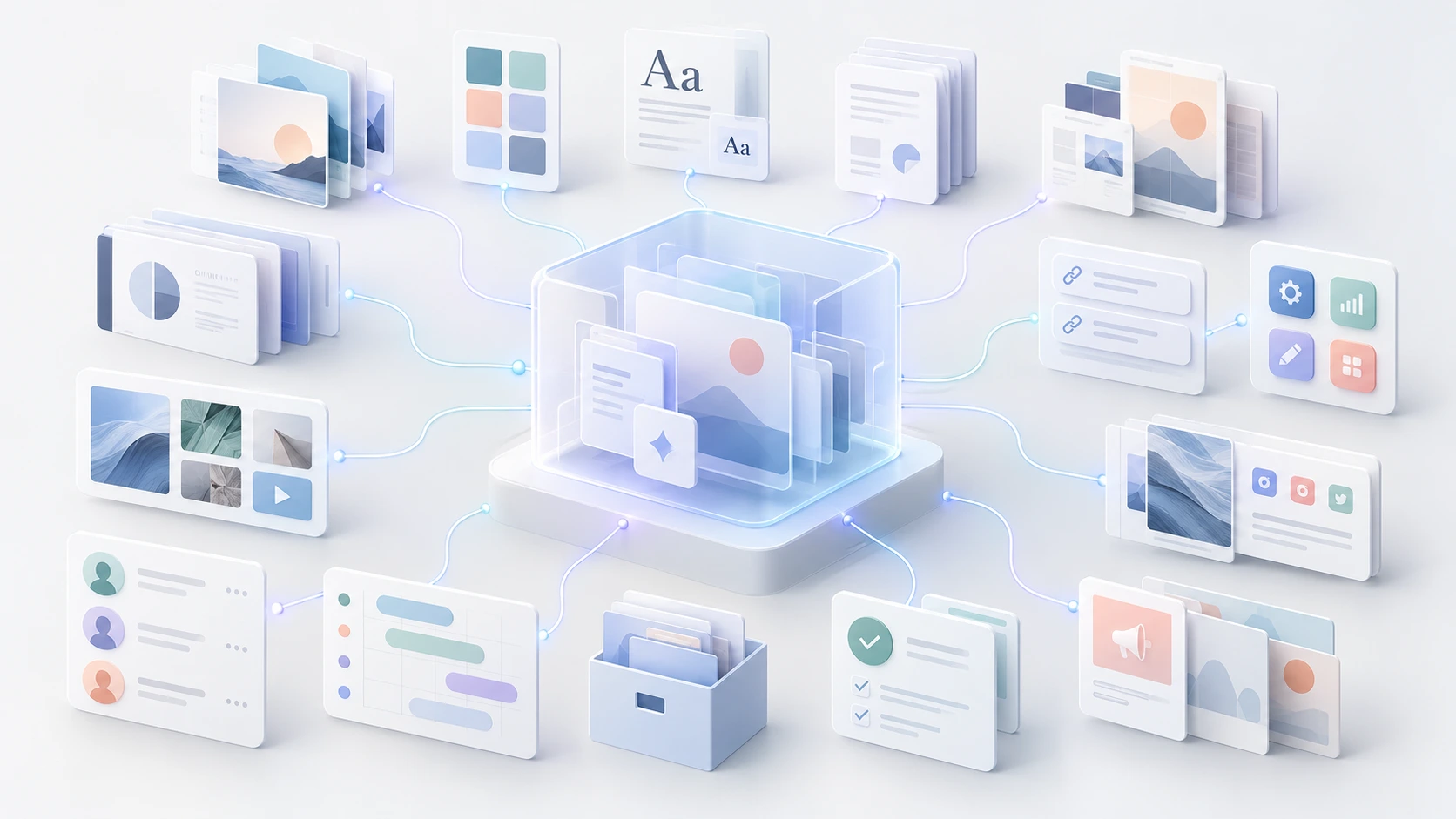
Centralized knowledge gives your team one reliable place to access the information they need to work together effectively.
What Is Centralized Knowledge?
Centralized knowledge means organizing important business information in a shared, accessible system instead of leaving it scattered across personal folders, email threads, chat messages, and different tools.
This can include:
-
Client information
-
Brand guidelines
-
Project documents
-
Processes
-
Meeting notes
-
Decisions
-
Research
-
Templates
-
Important links
-
Internal documentation
The goal is not necessarily to store everything in one platform.
The goal is to give your team one clear place to start.
1. Everyone Works From the Same Information
Collaboration becomes difficult when different people are working from different versions of the truth.
One person may have the latest document.
Another may be using an older version.
Someone else may be relying on information from an email sent weeks ago.
A centralized knowledge system reduces this confusion by giving everyone access to the same current information.
That makes collaboration more consistent and reduces unnecessary corrections.
2. Teams Spend Less Time Asking Questions
Many workplace questions are not really knowledge problems.
They are access problems.
Questions like:
“Where is the latest client brief?”
“Do we have the brand guidelines?”
“What did we decide in the last meeting?”
“Where is the campaign report?”
may already have answers somewhere.
The problem is that people cannot find them easily.
Centralizing knowledge reduces these repeated questions and helps team members find answers independently.
3. Decisions Become Easier to Understand
Good collaboration requires context.
It is not always enough to know what was decided.
Teams also need to understand why the decision was made.
A centralized knowledge system can capture:
-
What was decided
-
Why it was decided
-
Who was involved
-
What happens next
This helps people understand previous decisions without reopening the same conversations again.
4. Cross-Team Collaboration Becomes Easier
Different teams often work in different systems.
Marketing may use one tool.
Design may use another.
Sales may use a CRM.
Operations may rely on internal documents.
When important knowledge is centralized, teams can understand what other departments are working with without constantly requesting information.
This is especially important for agencies, where account managers, designers, marketers, strategists, developers, and freelancers may all work on the same client.
5. New Team Members Can Contribute Faster
Onboarding becomes much easier when information is organized.
A new employee needs to understand:
-
How the company works
-
How clients are managed
-
Where resources are stored
-
Which processes to follow
-
What decisions have already been made
Without centralized knowledge, experienced employees have to explain the same information repeatedly.
With a clear knowledge system, new team members can learn more independently and start contributing faster.
6. Knowledge Does Not Stay Trapped With Individuals
Many teams depend heavily on certain people.
One account manager may know everything about a client.
One designer may know where every asset is stored.
One team member may remember how a specific process works.
That creates risk.
If that person is unavailable or leaves the company, the rest of the team may lose valuable context.
Centralizing important knowledge turns individual knowledge into shared team knowledge.
7. Remote and Hybrid Teams Work More Effectively
Centralized knowledge becomes even more important when people are not working in the same physical space.
In an office, someone can quickly ask a colleague where something is.
In a remote team, that question may sit unanswered for hours.
When information is documented and easy to access, people can continue working without waiting for someone else.
That makes asynchronous collaboration much more effective.
8. Teams Can Make Faster Decisions
Good decisions depend on access to good information.
When client history, research, documents, previous work, and decisions are easy to find, teams can spend less time gathering context and more time deciding what to do next.
This improves collaboration because discussions begin with shared information rather than information discovery.
9. Work Becomes More Consistent
Centralized knowledge helps teams follow the same processes.
Instead of every employee creating their own way of doing something, the organization can maintain shared:
-
Workflows
-
Templates
-
Checklists
-
Guidelines
-
Best practices
This creates more predictable results and makes collaboration easier across teams and projects.
10. Collaboration Becomes Less Dependent on Meetings
When information is difficult to access, teams often compensate with meetings.
Meetings become the place where people share updates, explain decisions, or provide missing context.
But when knowledge is documented and accessible, many of those updates can happen asynchronously.
Meetings can then focus on work that actually requires discussion, creativity, or decision-making.
Centralized Knowledge Is More Than Documentation
A centralized knowledge system is not simply a folder full of documents.
The information also needs to be:
-
Organized
-
Current
-
Searchable
-
Connected
-
Easy to understand
The goal is to help people find the right information quickly and understand how it relates to their work.
Why Centralized Knowledge Matters for Agencies
Agencies manage knowledge across many different clients.
Each client may have:
-
Brand assets
-
Guidelines
-
Documents
-
Campaign history
-
Important links
-
Digital tools
-
Previous decisions
If that information is scattered, every team member has to rebuild context when they start working on an account.
A centralized client workspace gives the whole team a shared starting point.
Instead of searching across different places, team members can start with the client brand and access the information connected to it.
How Awolan Helps Teams Centralize Client Knowledge
Awolan is designed for teams and agencies managing multiple client brands.
It gives each client brand a centralized workspace for assets, documents, links, digital tools, and other important resources.
That means designers, marketers, account managers, and other collaborators can access the same brand context without relying on one person to explain where everything is.
Instead of:
Ask → Search → Wait → Find
the workflow becomes:
Client → Brand → Information
That creates a much clearer foundation for collaboration.
Better Collaboration Starts With Shared Context
Teams collaborate better when everyone has access to the same information.
The latest files.
The previous decisions.
The correct resources.
The relevant client context.
Centralized knowledge helps reduce searching, repeated questions, unnecessary meetings, and dependence on individual memory.
Most importantly, it gives your team a shared place to understand the work.
Every client. Every brand. One place.